



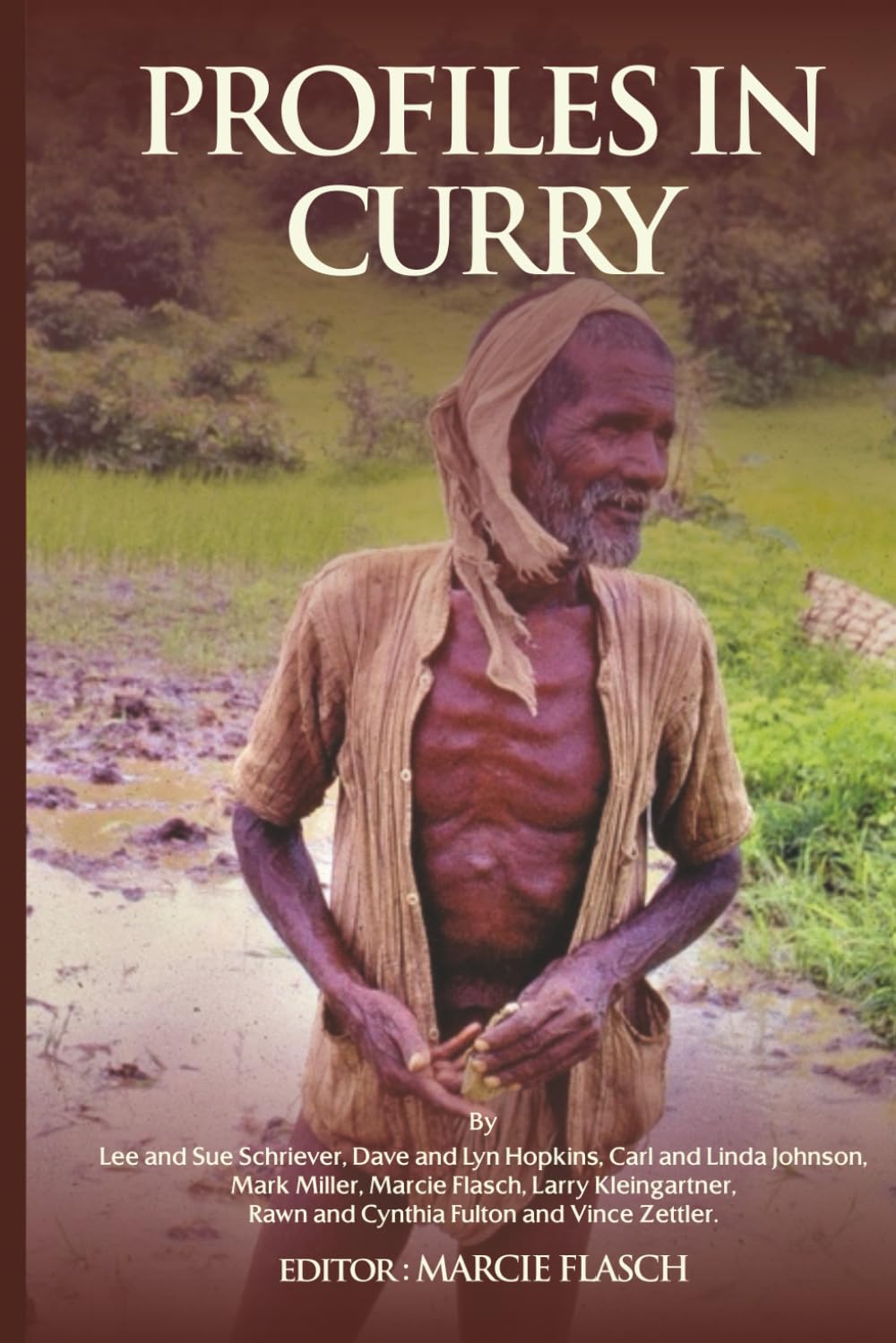
PROFILES IN CURRY: Life in Maharashtra, India, as seen through the eyes of the Peace Corps Volunteers from 1969-1971 Paperback – February 27, 2026

 4.4 (117 items)
 Limited Time Sale
$14.43 cheaper than the new price!!
Free cash-on-delivery fees for purchases over $99
Product details
| Management number | 220500132 | Release Date | 2026/05/03 | List Price | $9.62 | Model Number | 220500132 | ||
|---|---|---|---|---|---|---|---|---|---|
| Category | |||||||||
President John F Kennedy introduced the idea of a Peace Corps in September of 1960. The proposal gained momentum and in his inaugural address in January of 1961 he promised aid to the poor of the world:“To those peoples in the huts and villages of half the globe struggling to break the bonds of mass misery,” he said, “we pledge our best efforts to help them help themselves, for whatever period is required–not because the communists may be doing it, not because we seek their votes, but because it is right.” He also appealed to Americans to “ask not what your country can do for you, ask what you can do for your country.”After March 1, thousands of young Americans answered this call to duty by volunteering for the Peace Corps, a Peace Corps that would “promote world peace and friendship” through three goals:1. to help the peoples of interested countries in meeting their need for trained men and women; 2. to help promote a better understanding of Americans on the part of the peoples served; 3. to help promote a better understanding of other peoples on the part of Americans.The agency, which was headed by Kennedy’s brother-in-law, R. Sargent Shriver, who eventually placed 750 volunteers to serve in thirteen nations in 1961.By the end of 1963, 7,000 volunteers were in the field, serving in 44 Third World countries. Since 1961, more than 240,000 Americans have joined the Peace Corps, serving in 142 nations.We Peace Corps Volunteers whose stories are featured in this anthology were the early Boomers, born shortly after the end of World War II and raised in the emerging economy of middle class America. We often heard our parents, products of the Great Depression, say that they wanted better lives for us than they themselves had. They may have been the last generation to say that and be able to deliver. We were well-educated and ready to take on the world.We were also restless, uninspired by the prospects of a nine to five job, a house, car payments and the seemingly easy slide into respectability our parents craved for us. The Vietnam War hovered like a vulture over the young men of that time. On any given day their feelings wavered between anxiety and guilt; anxiety over the prospects of getting drafted and then guilt if their number wasn’t called. It was a difficult time for any thinking person and that’s one thing our group did well. We thought. And our biggest question then was: What’s next?What’s next for thirty eight of these Americans was a Peace Corp Tribal Agriculture program in Maharashtra, India. Nineteen couples answered Kennedy’s clarion call to service. We were young, but not strangers to unrest over the war, sexual stereotypes and the struggles of black and white American politics. We grieved the loss of JFK, Martin Luther King and Bobbie Kennedy. We earned academic degrees in national trauma.Peace Corps was only a few years old at that time and was viewed as a great adventure for people just like us. We applied and were accepted for the agriculture program in the state of Maharashtra, also referred to as Bombay State at the time.The chapters that follow detail the exploits of nine gritty couples (others left for health reasons or because of language difficulty) who slogged their way through rice paddies, unbearable heat waves, dysentery and life affirming monsoons to bring new varieties of rice and wheat to the Adivasi Tribals: the term used to describe the original tribal inhabitants of India. Read more
| ISBN13 | 979-8249750343 |
|---|---|
| Language | English |
| Publisher | Independently published |
| Dimensions | 6 x 1.03 x 9 inches |
| Item Weight | 1.68 pounds |
| Print length | 454 pages |
| Publication date | February 27, 2026 |
Bestseller ranking
India & South Asia


Customers who viewed this product also viewed
Burettes


Correction of product information
If you notice any omissions or errors in the product information on this page, please use the correction request form below.
Correction Request Form